Indian music music photoblogging: Bhimsen Joshi Gangubai Hangal khyal Kumar Gandharva Malini Rajurkar Mallikarjun Mansur
by Warren

1 comment
Meta
SiteMeter
Brighter Planet

Khyal Photoblogging
These were taken between 1985 and 1987, at various concerts in Pune, Mumbai, Miraj and Delhi. Enjoy:
Bhimsen Joshi:
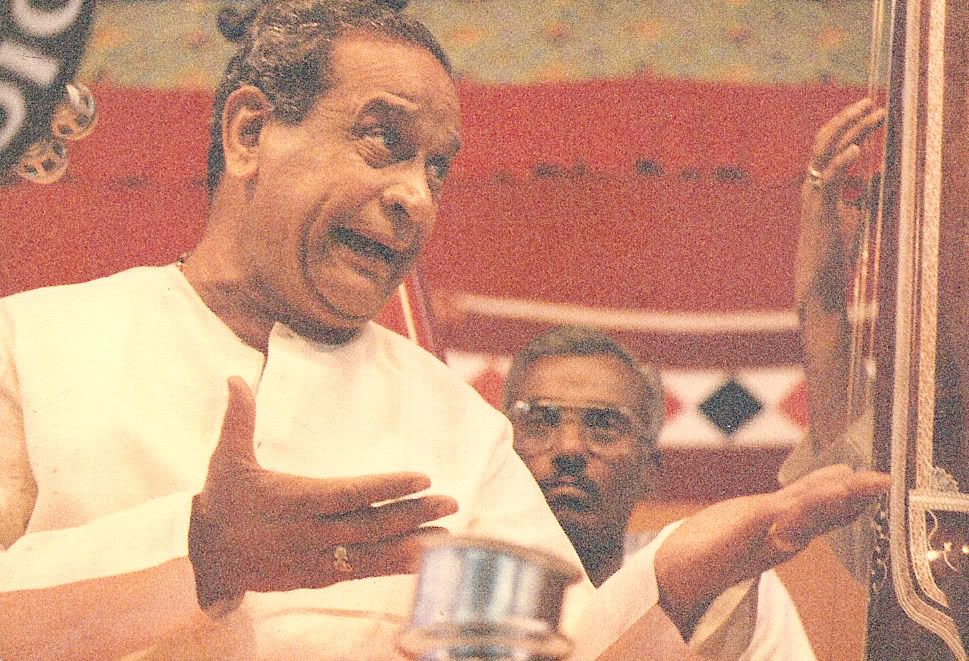
Sawai Gandharva Mahotsav, 1985. He was singing a beautiful Todi, “Changai nainawa” followed by “Langara kankariyaa jina maaro.” Nana Muley on tabla, Purushottam Wallawalkar on harmonium.
Education Jazz music: charlie banacos obituaries
by Warren
2 comments
Meta
SiteMeter
Brighter Planet
The Harmonics of Intensive Care: Charlie Banacos, R.I.P.
One of the country’s greatest music teachers died yesterday. Charlie Banacos taught jazz theory and ear-training for decades from his Massachusetts home; his students include many of the most famous names in jazz music.
His students have performed or recorded with Duke Ellington, Miles Davis, Maynard Ferguson, Chick Corea, Wynton Marsalis, David Liebman, Wayne Shorter, Michael Brecker and Joe Henderson, among others.
I never studied with Charlie, although many friends and colleagues did. Most importantly for me, the man who taught me most of what I know about jazz was a long-time student of his, so although we never met, I am part of his pedagogical lineage.
But that’s not what this post is about. When I heard about Charlie’s death (through a post on Facebook) I went to the “Charlie Banacos Students” FB page to learn more. And there I read a post called “Email from Charlie.”
Indian music October 24 Action photoblogging: Dance Indian dance photoblogging
by Warren
leave a comment
Meta
SiteMeter
Brighter Planet
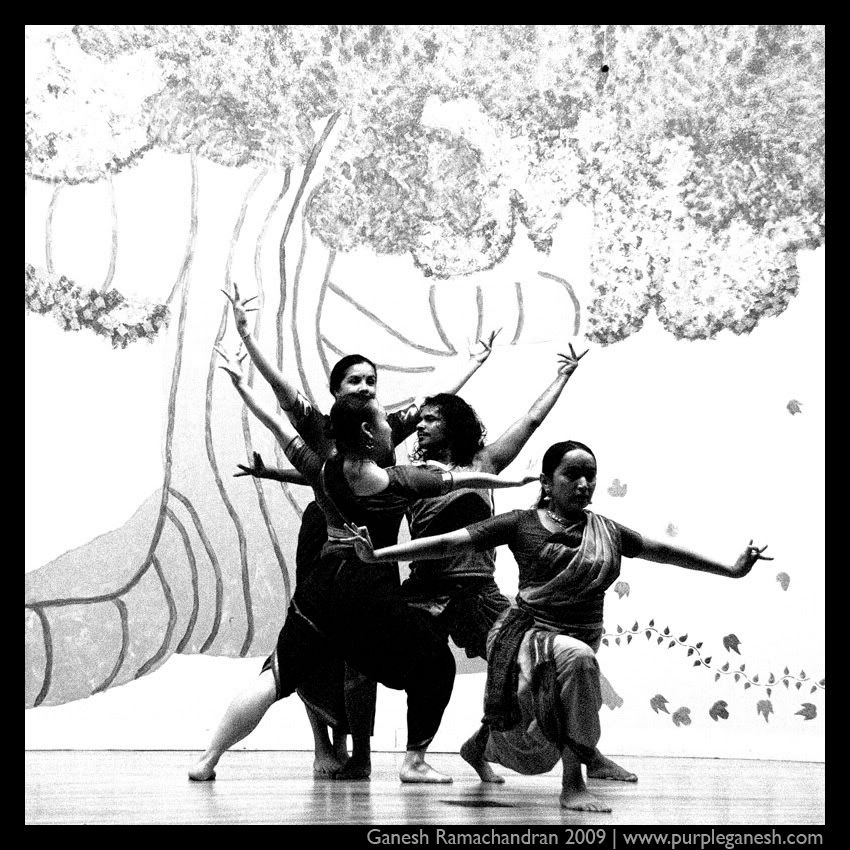
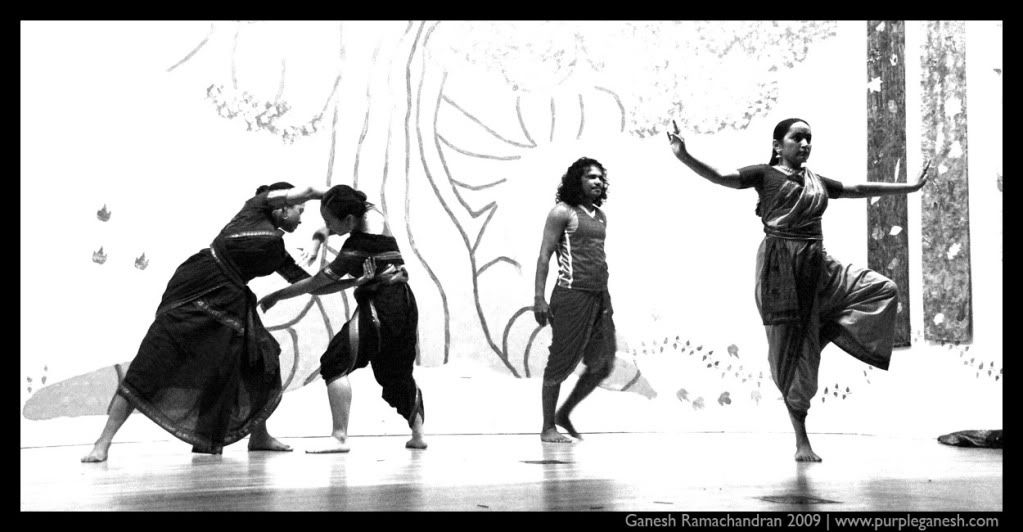
Aparna Sindhoor Dance Theater: New Photos
Ganesh Ramachandran took these photographs of the Aparna Sindhoor Dance Theater during the “Playing for the Planet” concert. I think they’re terrific.
Education Jazz music: Charlie Haden Dewey Redman Edward Blackwell Harmolodic Concept improvisation lecture-demonstration Ornette Coleman
by Warren
9 comments
Meta
SiteMeter
Brighter Planet
The Old And New Dreams Band: A Lecture-Demonstration
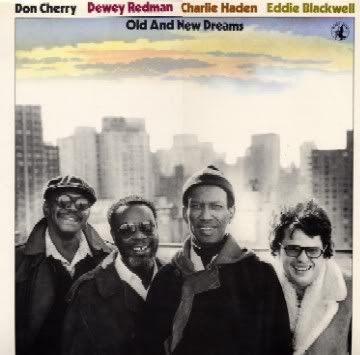
The first Old and New Dreams record on Black Saint has long been one of my Desert Island Discs. The rhythm section of Charlie Haden and Ed Blackwell serves up a magnificent polytextural stew in support of the melodic initiatives of Don Cherry and Dewey Redman; everybody plays brilliantly throughout.
In many ways, the work of this band always struck me as a purer presentation of Ornette Coleman’s concepts than many of Ornette’s performances. I mean by this that the shifting tonalities and re-centerings of melodic structure that are at the heart of Coleman’s work are in many ways easier to hear when the composer’s unique alto saxophone sound is not present. Ornette’s sonic presence is undeniable, but when he’s not there it becomes easier to think of the Harmolodic approach as a system that can be used by other musicians. When Ornette’s concept is used (and, as we hear below, explained) by other players, it is easier to separate the things they play from their performance personae. Ornette is such a dramatic and eccentric figure that it is tempting to explain Harmolodics as a species of musical crankery. When Don Cherry, Dewey Redman, Charlie Haden and Ed Blackwell interpret his music and influence, the importance and essentiality of Coleman’s Harmolodic Concept is indisputable.
They came to Harvard University in 1980 and played, if memory serves me correctly, at the Loeb Drama Center — an unusual venue. Hearing the band perform live in Cambridge was a truly wonderful experience; some memories from that gig still stand out (like watching Ed Blackwell create a huge blanket of rhythms without, apparently, moving his hands at all). I heard them again at a Cambridge jazz club (Jonathan Swift’s? I forget) a few years later, and they were brilliant then, too. But I digress.
One of the most memorable features of their time under Harvard’s auspices was the lecture-demonstration that Cherry, Redman and Haden gave at Adams House on February 29 (Blackwell was unavailable due to medical issues; IIRC he was doing daily dialysis). I recently digitized the recording of that lec-dem (made on a lo-fi boombox belonging to the drummer and drum-maker Betsy McGurk, who can be heard asking a few questions in the Q&A portion of the presentation) and I’m happy to present it here, along with a transcription (the result of many enjoyable late-night hours).
I have my own thoughts on what Ornette’s “Harmolodics” is all about (the fact that Ornette uses the word “love” a lot when he talks about his music theory is an interesting clue) and someday I’ll write them down and put them out here…but for now, here are Don Cherry, Dewey Redman and Charlie Haden, talking and playing about their music and their mentor, Ornette Coleman. Enjoy.
Jazz music Warren's music: Antigravity Bob Pilkington Dee Wood old stuff Phil Scarff Rick Barry Tom MacDonald
by Warren
2 comments
Meta
SiteMeter
Brighter Planet
Antigravity, 1980s edition. One of the best bands I’ve ever played in.
ANTIGRAVITY
Phil Scarff – tenor and soprano saxophones.
Bob Pilkington – trombone and percussion.
D. Wood – guitar and percussion.
Warren Senders – bass and percussion.
Rick Barry – percussion.
Tom MacDonald – drums.
Farewell Concert: September 23, 1983.
Old Cambridge Baptist Church, Cambridge, MA
This was an excellent band.

music October 24 Action Warren's music: Jose Feliciano Malvina Reynolds singer-songwriter Suzanne Vega Vijaya
by Warren
3 comments
Meta
SiteMeter
Brighter Planet
Playing for the Planet: Vijaya Sundaram
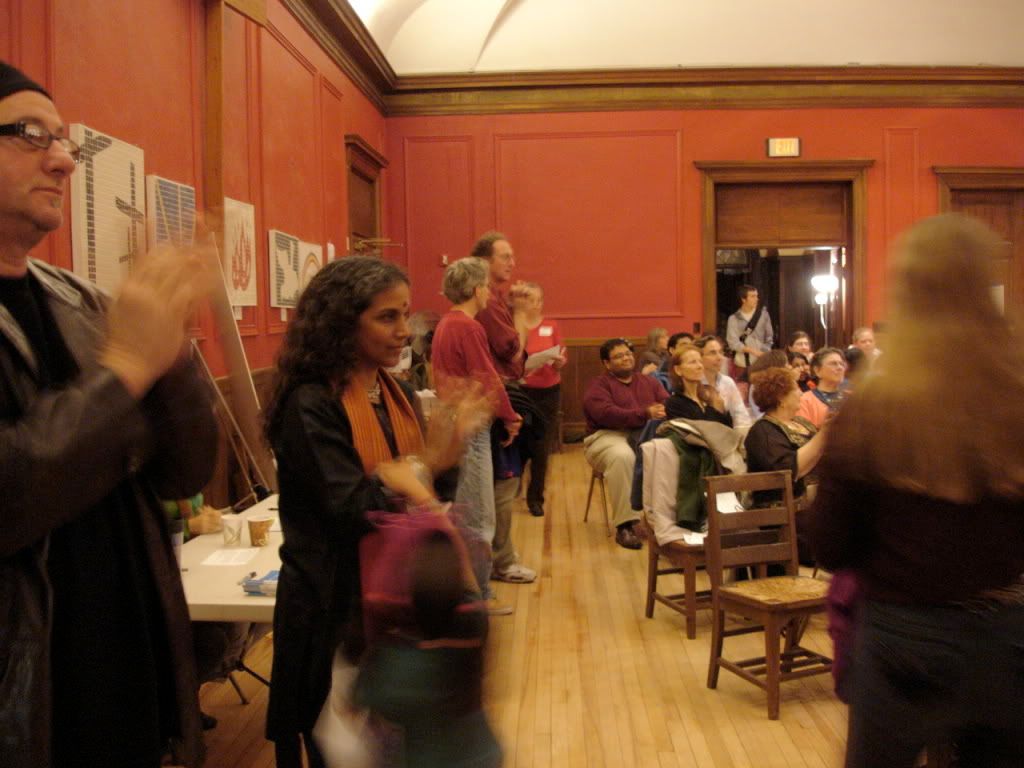
Vijaya Sundaram is a musician of superb abilities. An excellent composer and lyricist, she has a wide repertoire of material from many of the great songwriters. Over the past decade, however, she’s been away from the performance scene, pursuing a career as a teacher in a local public school, and spending a lot of time with our daughter Sharada.
The “Playing for the Planet” concert actually saw her in three separate roles: as vocal accompanist for my set of khyal, as a member of the Agbekor Society, and as the singing and speaking MC of the evening.
music October 24 Action: Japan japanese music koto shakuhachi wabi-sabi
by Warren
leave a comment
Meta
SiteMeter
Brighter Planet
Playing for the Planet: Elizabeth Reian Bennett and Ayakano Cathleen Read
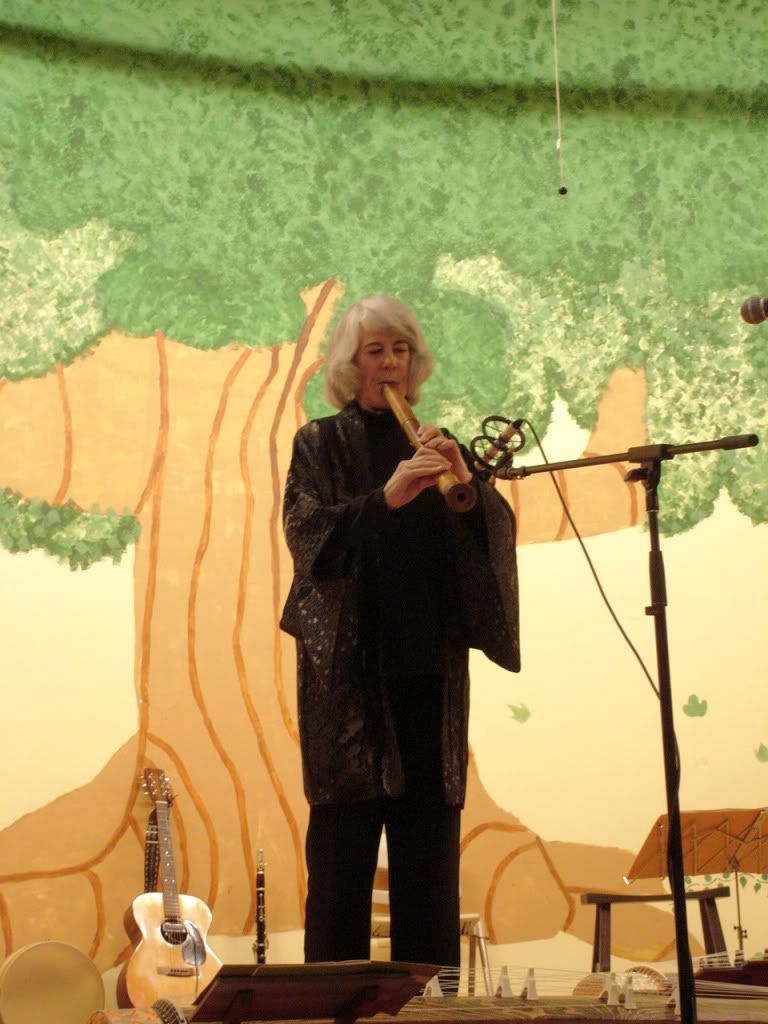
I have always been tremendously moved by the spare elegance of Japanese classical music. The modal environment triggers my affection for some of the popular Hindustani pentatonic ragas, while the rough edges, empty spaces and fantastically varied qualities of attack, sustain and decay force me into a more Cagean listening space.
This aesthetic of open space contrasts greatly with Indian music’s demand for a continuously saturated surface; as a khyal singer I am always engaged in that supersaturation, and I love it…but at times I envy the sparse and evocative economy of Japanese melodic lines — so different, and yet so similar.
Need I point out that Japan (an island nation) is particularly vulnerable to the rising ocean levels which will be triggered by catastrophic climate change?
The music presented on Saturday night by Elizabeth Reian Bennett, Ayakano Cathleen Read and Charles Hughes was a beautiful glimpse into an ancient tradition rarely heard today. I am deeply grateful for their performance.
music October 24 Action: balkan music libana sephardic music women's music
by Warren
leave a comment
Meta
SiteMeter
Brighter Planet
Playing for the Planet: Libana’s set
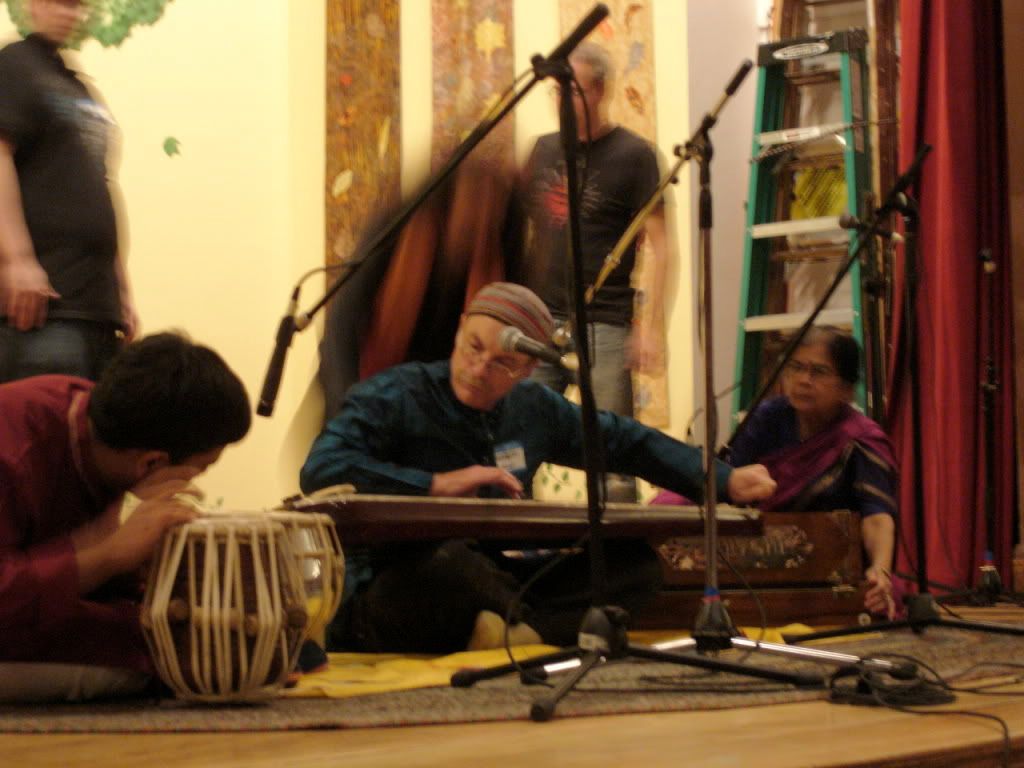
Officially, this was not an appearance by Libana, but rather by “four-sixths of Libana” — two members being unable to attend. According to Sue Robbins, this was the first time in the group’s thirty-year history that this particular combination performed live.
Aside from the obvious fact that these women are superb musicians who put their minds, hearts and souls into their music unstintingly, what can I possibly say?
Well, “thank you” is a good start. Their enthusiasm, their readiness to participate, their profound musicianship…in an evening full of high points, their set was a real delight. I have included their introductory remarks, which do a great job of explaining the material.
Enjoy!

environment Indian music music October 24 Action Warren's music: Gorakh Kalyan khyal Raga
by Warren
4 comments
Meta
SiteMeter
Brighter Planet
Playing for the Planet: Warren Senders’ set
When I first got the idea for the “Playing for the Planet” concert, I knew instantly that I wanted to sing these three compositions in Raga Gorakh Kalyan. I will update later on with the complete text and meaning; tonight I just want to get this posted before I go to sleep.
music October 24 Action Warren's music: African music Ewe music Ghana
by Warren
1 comment
Meta
SiteMeter
Brighter Planet
Playing for the Planet: The Agbekor Drum and Dance Society
In 1979, I was running the scheduling at “Cambridge Custom Percussion,” the Cambridgeport neighborhood drum shop. Selling the conga drums made by “Conga Jim” VanDenAkker and the ceramic dumbeqs of Betsy McGurk during the day, the shop changed into a small performance and teaching space. I was twenty-one; the youngest member of the ad hoc collective that supposedly ran the place. I was looking for teachers who were interested in giving classes in various styles of group drumming…and that’s how I met David Locke, recently returned from several years’ study in Ghana. He was already teaching at Tufts, but began a regular class at CCP. That class took off; people loved the repertoire, and David was (and is) an exceptional teacher.
After a while, there was enough of a regular group that it became a repertory ensemble, the Agbekor Drum and Dance Society (eventually, if memory serves me right, incorporating as a 501(c)3 non-profit). I was never personally interested in learning the master drum parts; all I really wanted to do was play the kagan, the small high-pitched drum which fills in the offbeats in Ewe music.