Jazz music: Jazz Jon Hendricks Mel Torme Scat singing
by Warren

leave a comment
Meta
SiteMeter
Brighter Planet

Mel Torme is Amazing
Here’s Mel doing two terrific duets, the first with Jon Hendricks, the second with his son Steve.
Torme’s intonation, voice production and melodic imagination are a joy to the ear. I particularly enjoy his work with Hendricks, which seems a little raw-er, a little looser.
Education India Indian music music: drone gesture R. Murray Schafer silence Singing Imagination tamboura texture
by Warren
3 comments
Meta
SiteMeter
Brighter Planet
Some Thoughts on the Drone
The drone lives at the center of Hindustani music, and yet I think its significance has rarely been stated completely. To say that it affirms or creates the tonality is to state the obvious; rather, think of the number of musical systems in the world in which the drone is implicit or only occasionally stated. Why then is the tamboura so essential in Hindustani music? In concerts, a singer often gestures to the tamboura players, indicating “more force, more volume!” — why?
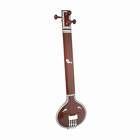
R. Murray Schafer, that marvelously creative Canadian composer and educator, offers us a complementary pair of terms, gesture and texture. Hindustani melody is gesture refined and elaborated; gesture with fractal sub-gestures endlessly revealing themselves to careful listening. The complement to a gesture is a texture, where elements are sustained with enough consistency that they form a ground, a backdrop — a context within which isolated ideas can be heard and appreciated.
Jazz music: genius thomas quasthoff
by Warren
leave a comment
Meta
SiteMeter
Brighter Planet
Thomas Quasthoff
The extraordinary Thomas Quasthoff, singing improvisations on Miles Davis’ All Blues. One of the interesting things about this is that since he comes from a classical background (although he’s apparently loved and enjoyed jazz his whole life, which is pretty obvious from this performance), his handling of this piece has not a whiff of the “doing-a-standard-that’s-been-done-to-death-already” atmosphere which you sometimes find in the work of hipper-than-thou musicians who wouldn’t be caught dead singing something as hackneyed as, say, All Blues.
Or, for that matter, My Funny Valentine.
Education Indian music music: practice riyaaz
by Warren
4 comments
Meta
SiteMeter
Brighter Planet
More Notes on Practicing
More material taken from my long-ago interview with my student Brian O’Neill. This discusses a practice technique called:
One Lick for Two Hours
Now, when you’re trying to build up speed and technical fluency the following exercise is very useful:
Compose a line (preferably in your head) 2 or 3 notes at a time… and keep building it up until you have something that covers the range that you want to cover and includes whatever kind of technical things you want to address (scalar segments, intervallic jumps, whatever).
Switch the metronome on (at around 60 bpm) and do the line in half notes, keeping the metronome not on the downbeats, but on the upbeats (2 & 4). That is, your sung articulations and the metronome’s strokes aren’t happening at the same time.
Go through the whole line in sargam, in neutral syllables, and in open vowels. If you’re an instrumentalist, go through the line using individual articulations on each note, then with a legato approach.
At which point you double the speed, so that the same line is now sung in quarter-notes, one note per pulse. The metronome needs to stay on the offbeats! Again, do it in sargam, neutral syllables and one or two open vowels.
Then go back to the original tempo and revisit that for a few iterations.
Now move the metronome up a click. If you have a digital metronome, go up by three or four beats per minute.
Repeat the process exactly as before, and when you’re done, move the metronome up another few bpm.
Eventually you’ll get up to mm 120, which is exactly double your starting tempo. Do the same exercise at that tempo…and then shift the metronome back to 60.
Only this time, maintain the same sung/played speed you had at mm 120 — with the metronome at the slower tempo. Now you’ll be singing the line in quarter and eighth notes relative to the speed of the metronome.
Repeat the alternation of “single” and “double” speed, with the metronome still on 2 and 4. (For extra credit, why does this practice work better when the metronome’s on the offbeats?). Keep going up by a few bpm at a time.
Eventually you’ll reach a point where you can go no further; a point where your technique is on the edge of failure.
Don’t stop the practice just yet. Instead, back down by a notch or two, repeat the material, then back down again. Do this eight or nine times, so that when you finally conclude the practice, you’re midway between your maximum speed and mm 60.
Stop.
Go take a walk or something. That’s enough of that practice for the day.
This is not a ten minute practice, this is a two hour practice. Two hours on one lick. The important thing is to keep that process going, all the way up and then retreat, incrementally, back down to about halfway from your original starting point.
This gradual up and down incrementation turns out to be very useful for building a solid technique at all levels of speed. It’s boring as hell, but it works a treat.
I remember sitting down to practice in my apartment in Pune. I was practicing Yaman, I sat down to practice, and I practiced one line for about an hour and forty-five minutes — using this metronome technique. Then I finished, I turned off the sruti box, and immediately my doorbell rang. And I went over and it was Atul, the sitarist in my ensemble. And he said, “That was incredible!” I said, “You were listening to the practice? How long were you there?” He said, laughing, “Oh, I arrived just before you began!” So he had been outside my door for an hour and forty five minutes listening to me go over the same thing and he was completely thrilled to have heard this practice. That was very interesting to me. Not everybody would find that interesting, but Atul did.
Pt. Dinkar Kaikini, R.I.P.
I just learned that Kaikini died earlier this week in Mumbai. I have always been extremely fond of his singing. Here are two clips for your enjoyment. First, a wretchedly bad video with a sublime rendition of Todi:
and second, this beautiful Kabir bhajan:
Many years ago, when I was in Pune under Bhimsenji’s auspices, Pt. Kaikini was visiting the Joshi residence. I was practicing in an adjacent room. After he left, Bhimsen’s wife Vatsala came into the room where I was singing. She said, “Pandit Dinkar Kaikini heard you singing, and he said ‘This one will be a singer.’ ”
In those days I didn’t get a lot of encouragement, so those words fell very sweetly on my ears. I’d loved Kaikiniji’s singing already, but his kindness in making that comment was really the icing on the cake.
Many of his commercial cassettes are excellent. While his voice is not for everyone, I love it.
Goodbye, “Dinarang.” Rest in Peace.
Education Indian music music: paltas patterns permutations practice Raga riyaaz
by Warren
9 comments
Meta
SiteMeter
Brighter Planet
Thinking About Palta Exercises
More of the material from my long-ago interview with my student Brian O’Neill. Here, I discuss the permutational practice routines known as Palta Exercises.
Hindustani musicians already know what I’m talking about. Western musicians will describe them as short phrases transposed up and down a scale: 123, 234, 345, 456, etc.
Paltas can be practiced within ragas, of course, but they are also useful for practicing ear-training and pattern manipulation inside scales.
To clarify the distinction: a palta in Raga Bhimpalasi would accommodate the omission of the second and sixth degrees in ascent, and the inclusion of these notes on the way down. Violating the raga’s rules of motion is off the table. On the other hand, a palta in Kafi Thaat (the Dorian mode, if you will) would not have any such restrictions.
Here’s a useful way to do paltas:
Pick a scale — any scale, preferably one that has 7 notes. Take a single short pattern (let’s call it a “cell”), and transpose it up and down in the scale.
For example:
S N S / R S R / G R G / M G M / P M P / D P D / N D N / S N S
N D N / D P D / P M P / M G M / G R G / R S R / S N SAnd once you’ve memorized it, then do another pattern.
S N D / R S N / G R S / M G R / P M G / D P M / N D P / S N D
S R G / N S R / D N S / P D N / M P D / G M P / R G M / S R G…Again, do that for 10 minutes.
And then alternate the two patterns, one after the other. Do it all from memory.
Then combine the two patterns:
S N S / S N D
R S R / R S N
G R G / G R S
M G M /M G R
P M P / P M G
etc., over as much of a range as you feel comfortable singing or playing.Then try combining the two in the other order:
S N D / S N S
R S N / R S R
G R S / G R G
M G R / M G M
P M G / P M P
etc.Try doing two iterations of the first “cell” and one of the second:
S N S / S N S / S N D
R S R / R S R / R S N
G R G / G R G / G R S
etc.Begin making up your own combinations of cell sequences, always using your memory to keep the material fresh in your mind’s ear.
Try, instead of alternating cells, alternating successive notes of the two different cells. S N S / S N D thus becomes S S N N S D; S N D / S N S becomes S S N N D S.
Instrumentalists should be singing these patterns as well as playing them. It is also a very good exercise to sing while fingering them on your instrument (without activating it in any other way). This builds a powerful cognitive link between instrument and voice that pays off in future fluency and expressiveness.
Education Indian music: hindustani music practice rhythmic cycles riyaaz tala theka
by Warren
leave a comment
Meta
SiteMeter
Brighter Planet
Understanding Tala – Internalizing Talas and Thekas
A thread on rec.music.indian.classical (USENET) attracted my attention today.
It started with a request:
“I am learning ICM at my own and also attending community school once in a week. I have following question when I tried to practice at home.”
1) In Teen Taal (16 Beats) From which beat the composition/bandish/alaap etc. starts ? i.e. should I start from Taali or Khali which beat #. ( I am using Radel DigiTaalmala)
2)Is there any book available to teach me the basic concept of starting composition with any Taala ? (means which will show me that in “xyz” taal – the composition will start from taali or khali or 3
or 4th beat etc.)Your advice/response will be highly appreciated.
With Kind Regards
Chandrakant
I responded as follows, in what strikes me as a pretty good summary of the advice I am frequently giving my students about working with theka:
There are two different issues at play here.
One is to understand the internal structure of the tala.
To do this it is very useful for a vocalist to practice theka
recitation. Note the relationships of the tabla bols to the tongue
and laryngeal position.All important right hand strokes use unvoiced dental “t” sounds: ta,
tin, tun tet. Na is the anusvar of that tongue position. Recite “ta
tin tin ta” over and over; experience the difference in overtone
structure between the “a” vowel and the “in” phoneme as each is
triggered by the “t” tongue attack.All important left hand strokes use the velar consonants. Ge and
Kat. Ge is a voiced velar that is sustained on an “e” vowel, Kat
begins with an unvoiced velar and ends with a retroflex “T” stop.Recite “Ge Ge Ge Ge Kat Kat Kat Kat” over and over, experiencing the difference between the voiced sustained and the unvoiced stopped velars.
But what of strokes that use both hands? Discover for yourself that
it is impossible to say “Ta” and “Ge” simultaneously. Try it; your
tongue won’t be able to do it.So how to speak the syllables for these strokes? Simple. Change the unvoiced dentals of the right hand to voiced dentals: ta + ge = dha; tin + ge = dhin, etc. Recite “Dha Dhin Dhin Dha” and feel that there is sonic activity taking place in two places in your vocal mechanism. Your vocal chords are making a steady stream of impulses (basically “uh uh uh uh uh uh” since shaping vowels is done by the mouth), and your tongue is articulating lightly between your teeth (“ta tin tin ta” etc.). The front of your mouth is the high drum, your throat is
the low drum.Now recite theka for a long time, and experience the rise and fall of impulses in your throat and mouth as you move through the cycle. Pay particular attention to the return of your vocal chords on the 14th matra, emphasize “dhin dhin Dha DHA” — that’s the sam.
In order to understand the relationship between the bandish and the theka, it is very useful to recite theka while listening to vocal recordings. In this you want to have standard professional accompanists; attempting to recite theka while Zakir is embellishing is much more difficult. On many older recordings, tabla is very low in the mix. I often tell my students to listen to someone like Veena Sahasrabuddhe as her recordings are generally mixed very well and the tabla players are people like Omkar Gulwady, who keep beautifully flowing theka without much finger-chatter.
Listen to many different bandishes while you recite. Observe the many different ways they have of coming to the sam and maintaining a relationship with it.
A useful exercise is (once you know where the sam is located on a
particular bandish) to sing one line of the chiz, then recite theka
*from the point in the cycle where the song begins*. Thus, an 8-beat mukhda would start on khali; one would sing the song text once, then recite, starting at khali: “Jabse tumhi sanga LAagali / Dha tin tin ta ta dhin dhin dha DHA dhin dhin dha dha dhin dhin dha / Jabse tumhi sanga laagali / Dha tin tin ta ta dhin dhin dha DHA, etc., etc.” A five-beat mukhda, on the other hand, might yield something like “Bolana LAAgi koyaliyaa / ta ta dhin dhin dha DHA dhin dhin dha dha dhin dhin dha dha tin tin / bolana LAAgi koyaliya / ta ta dhin dhin dha DHA, etc., etc.”Practice these approaches assiduously and enthusiastically and you will gain many interesting rhythmic insights.
Warren
music: Middle-Eastern music muezzin Sabri Moudallal Syrian music
by Warren
leave a comment
Meta
SiteMeter
Brighter Planet
Syrian Classical Music
Many years ago there was a store in Harvard Square that specialized in Middle-Eastern music. I went in there pretty frequently; the music is close enough to Hindustani tradition that I felt a great aesthetic consanguinity, but different enough that I never knew what was going to happen. I got to know the proprietors casually, and they began recommending items to me when I dropped in.
One day the primary storekeeper pulled out a CD and said, “You must hear this!” It was “Sacred and Profane Songs of Syria,” a recording of Sabri Moudallal, the principal muezzin of the Great Mosque at Aleppo, Syria. I was riveted. Amazing breath control, vocal projection that suggested a lifetime of sending sound over long distances…and a level of passion that I’d rarely heard anywhere. So I bought the record, and I bought a subsequent recording, “The Aleppian Music Room” a couple of years later.
Here’s a page with a bio and a photograph.
Moudallal was very old at the time of the recordings. I can only imagine what he sounded like as a young man. Every so often over the years I’ve checked YouTube for some of his music… And today?
Enjoy. Although the sound on these uploads is pretty crappy, the music is exquisite. The second piece is especially beautiful. Moudallal has some solo interludes about five minutes in; they tear me to shreds every time. Check out the long embellished phrases that begin at 5:47.
Indian music music photoblogging: Bhopa Jaisalmer Rajasthan ravanhatta
by Warren
8 comments
Meta
SiteMeter
Brighter Planet
Rajasthani Music: Tulcharam Bhopa plays Ravanhatta
In 2000, Vijaya and I traveled to Rajasthan, staying in Udaipur and Jaisalmer. I have loved Rajasthani music from the first time I heard it, and it was really a treat to listen to traditional artists in both cities.
The Ravanhatta (wiki spells it ravanahatha) is one of the oldest bowed instruments in the world.
The bowl is made of cut coconut shell, the mouth of which is covered with goat hide. A dandi, made of bamboo is attached to this shell. The principal strings are two: one of steel and the other of a set of horsehair. The long bow has jingle bells.[1]
The artists come from a lineage of bards, the Bhopas:
Every prominent family of the land-holding Rajput caste, I discovered, inherited a family of oral genealogists, musicians and praise singers, who celebrated the family’s lineage and deeds.
(snip)
…unlike the ancient epics of Europe – the Iliad, the Odyssey, Beowulf and The Song of Roland – which were now the province only of academics and literature classes, the oral epics of Rajasthan were still alive, preserved by a caste of wandering bhopas who travelled from village to village, staging performances.
Some Bhopas, of course, make their living performing for tourists. There were three or four ravanhatta players on the cobbled walkway up to the Jaisalmer Fort. We listened briefly to each; the one who really stood out to our ears was Tulcharam Bhopa, and we recorded a few of his pieces. It was early evening of Indian Independence Day, August 15, 2000.
Here are some of our photographs of Jaisalmer accompanying the beautiful playing of Tulcharam Bhopa, whom I’m told died a few years ago.
Education Indian music music: intonation khyal learning practice riyaaz singing
by Warren
leave a comment
Meta
SiteMeter
Brighter Planet
Practice Tips and Techniques, No. 1
About ten years ago my student Brian O’Neill and I had a long discussion about practice techniques. He transcribed it and sent it along to me, and it languished on my hard drive. Recently, I remembered the material and dug it out. It needs editing, so it’s going to take a while to get it all tidy, but there’s some worthwhile stuff in that document. The first part of the conversation was about practicing the drone — the most basic type of self-tuning a singer can do.
WS: When I started out I did not have any particular deep sense of discipline in practice. Eventually I began by starting every day with a drone session. I would just sing the tonic, the Sa. And I would focus on that, and I would…
BTO: Tune up?
WS: Yeah. You try & get your temporomandibular joint a little bit loose; you do a little bit of overtoning; some tongue stretches; try and make sure the soft palate is down and you’re getting sinus resonance. What I tell my students is to begin with a little session (it might be 10 minutes) of Sa, every morning. And when you do that, you examine different variations.
For example, subtle intonational shifts. Get on Sa and move the note the smallest possible amount flat, then return it to the center, then move it sharp and return it. What you’re really doing is, you’re decreasing the intonational standard deviation of the pitch.
So that’s one approach to the Sa.
Another approach is breath control. You get a watch with a sweep second hand, sing Sa [one breath’s worth], and time yourself. “Hmmm, that was 11 seconds. OK, I’m going to go for 12.” And then you ask yourself, “Where does most of the air go out? Oh, most of the air goes out in the very first half a second. OK, let me try and regulate that. Good!, I got 5 more seconds on that.” So those are all good ways of occupying yourself on the drone. So 10 minutes turns out to be nowhere near enough time, and you just pick one or another of those exercises to do with the tonic.
There’s a lot more to come, including very specific methods for organizing your practice to get the most effective study in the time you have available. Stay tuned!
Finally, a word on a related subject.
If you’re studying or teaching music, you’re engaged in the long, slow, work of taking parts of our past and preparing them to travel into the future.
Therefore, you owe it to yourself and to the music you cherish — to educate yourself about climate change.
No stable climate – no music. It’s as simple as that.
MUSIC IS A CLIMATE ISSUE